
As educators, report-writing season often brings a familiar anxiety. We stare at data, scan our class lists, and try to distill a child’s entire academic journey into a few concise lines. But this time my focus leading up to this cycle shifted: this time I’m not only writing reports as a specialist, I am also a class teacher reporting on all subjects and all learners (including multilinguals who aren’t on the EAL register). This time it’s even more important than ever that I focus not only on what I am writing in the comments, but how I see our students when I write them.
As a result of this reflection, I recently ran a CPD session for our staff where the goal was simple yet massive: to shift away from a deficit view of language learners and move toward a system rooted in equity, skill, and linguistic pride.
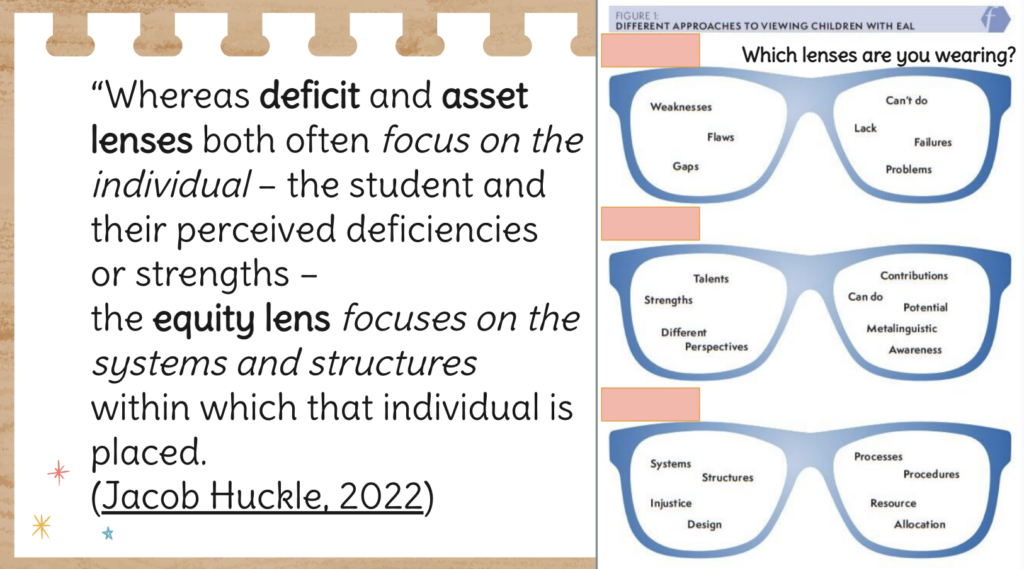
Which Lenses Are We Wearing?
We started the session by looking at our practices through three distinct lenses: deficit, asset, and equity (Huckle, 2022).
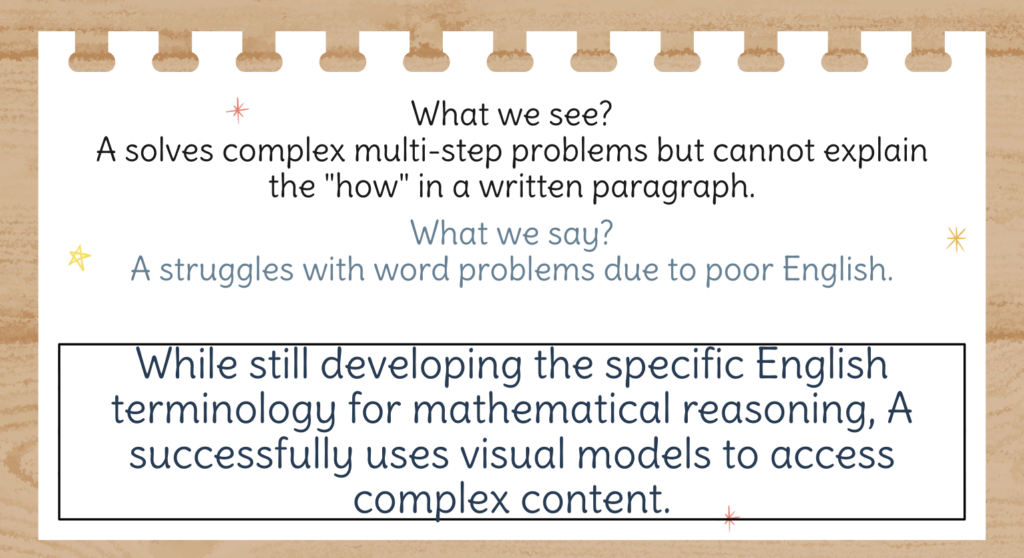
Historically, it’s incredibly easy for schools to slip into a deficit lens when writing about English as an Additional Language (EAL). We see it in well-meaning but damaging report comments like, “A struggles with word problems due to poor English” or “Language is a barrier for B”.
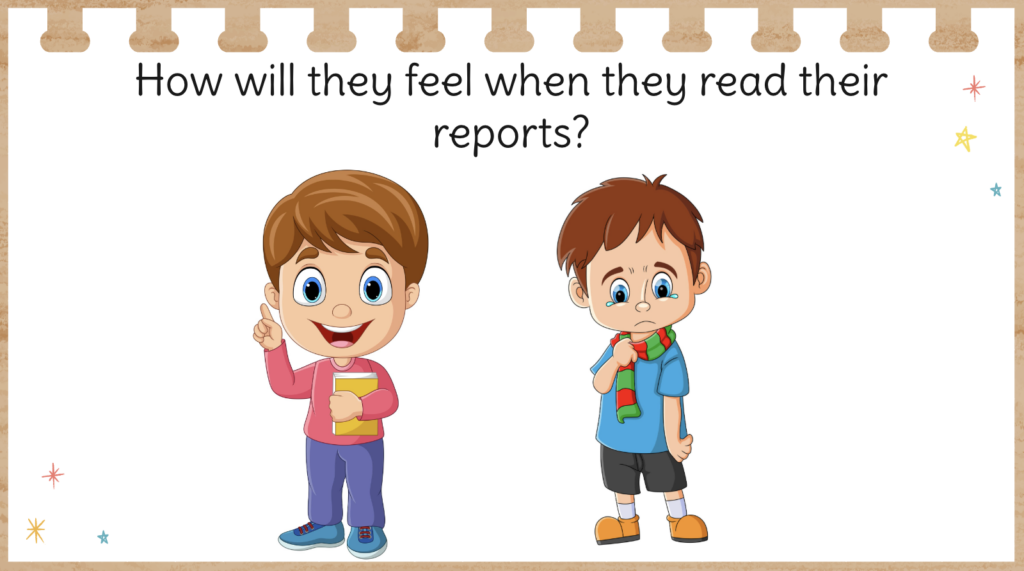
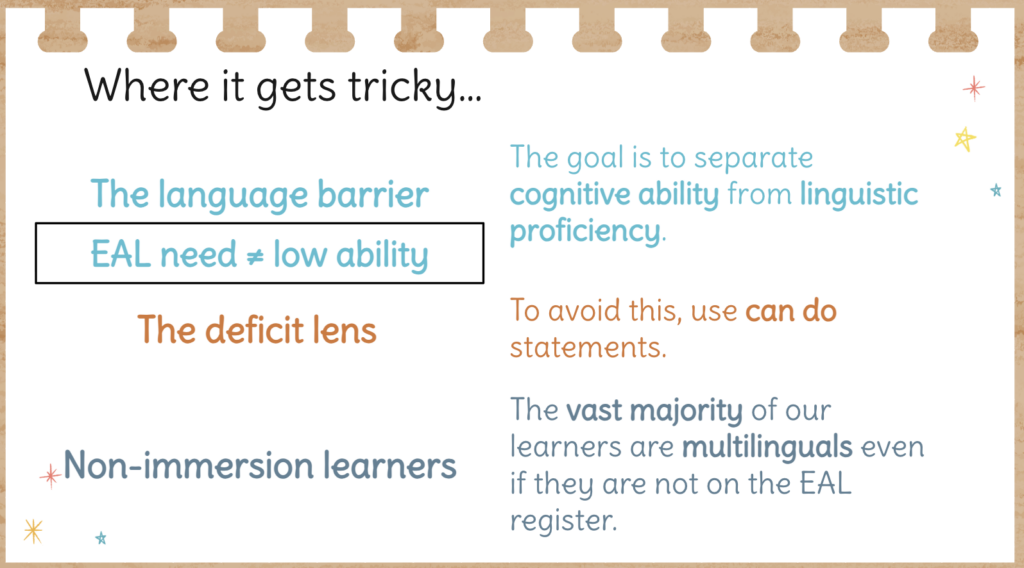
As a collective, our staff came to a firm consensus: words like “limited English” and “language barrier” have no place in our reports. They don’t build pride, and they don’t accurately reflect a child’s intelligence.
Instead, our teachers spent the session rephrasing comments to separate cognitive ability from linguistic proficiency. Because our teachers know these children day in and day out, the comments they co-created completely outpaced anything a generic AI template could generate. They channeled a beautiful, collective “catch the students doing good” attitude, reframing the narrative to highlight how students use visual models, home language support, and strong conceptual foundations to unlock new learning.
The Reflection: The “Invisible” Multilingual Population
While the session was a successful, leadership is a continuous journey of reflection. My original intent for this CPD was to look holistically at all our multilingual learners across the school – especially the vast majority who are fluent, mainstream speakers but still navigating complex academic registers.
However, upon reflection, I noticed that the immediate, acute pressure of the classroom pulled our focus back down to our immersion learners (Bands A and B). This is completely natural – when a child is in the early stages of English acquisition, the need feels urgent. But as my dear friend Gemma Donovan recently reminded me: Not all multilingual learners are immersion learners, even though all immersion learners will become successful experienced multilinguals at a certain stage.
This realisation is exactly where the door opens for our next academic year. Our EAL provision has progressed to a wonderful stage where we are stable enough to look past just survival immersion support and begin addressing the wider, nuanced needs of our highly sizable multilingual population.
Shifting the Cultural Framework
We are still at the beginning of this journey, but the mindset shift is well underway. By ensuring our reports focus on a child’s multi-step problem-solving, their scientific curiosity, and their rich linguistic repertoire, we aren’t just changing report comments – we are changing how we value the individuals in our classrooms.
To the staff who showed up with such empathy, expertise, and dedication during this session: thank you for catching our students doing good. Let’s carry that lens of pride into this reporting cycle.