
We’ve all had that student in our classroom. They are attentive, their eyes follow you as you move, and they seem to be soaking everything in – yet, they don’t say a word. As teachers, our instinct is often to “fix” the silence. We want to hear their voice; we want that verbal confirmation that they are learning. But what if that silence isn’t a void? What if it’s actually one of the most active phases of language acquisition?
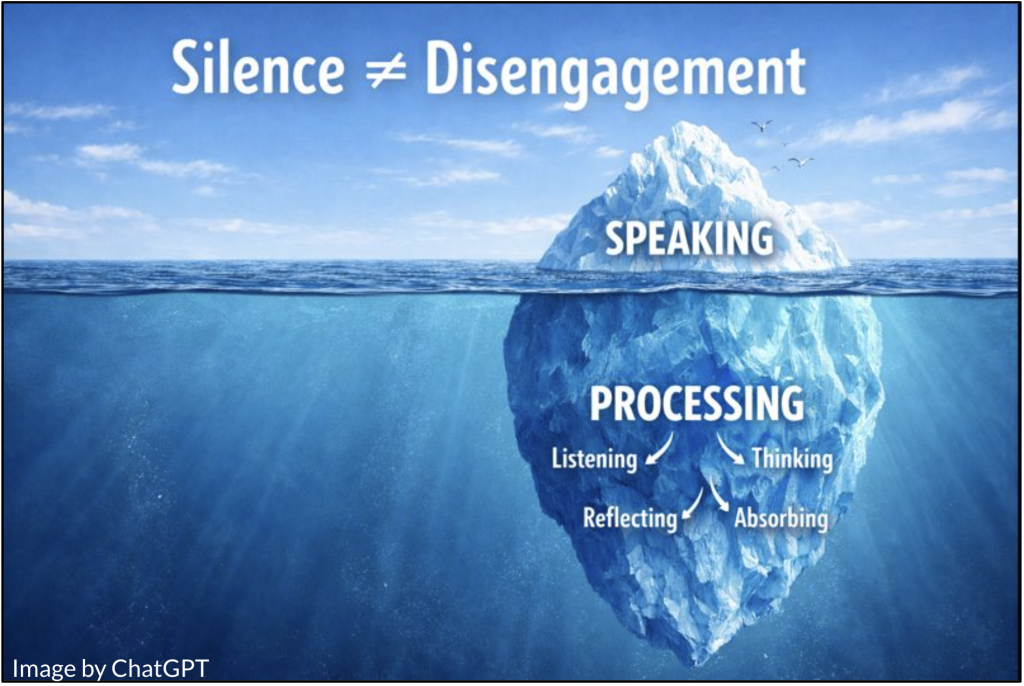
In my context as an EAL teacher, I often find myself advocating for these “quiet ones”. We are talking about the Silent Period, a naturally occurring stage where learners are building their receptive language skills before they feel ready to produce speech. This period can last anywhere from two weeks to six months, and in some cases, it can extend beyond a year.
The Science Behind the Silence
Look at the image below. Would you be able to answer the question? How quickly? Would your hand immediately shoot into the air?
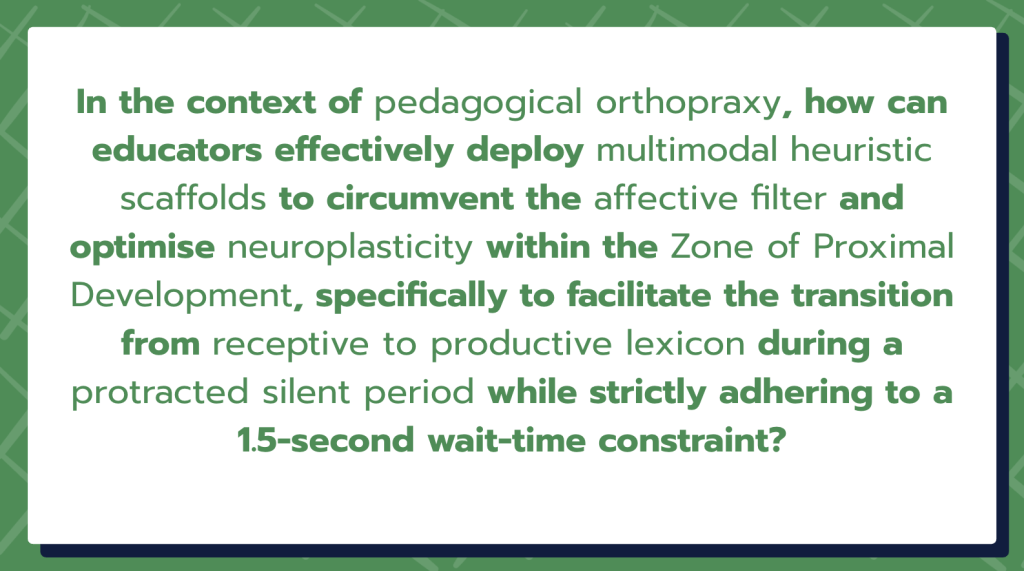
Don’t worry if you think: no way! Gemini helped me phrase this question in a way that simulates the cognitive challenge an EAL learner feels when they are cold called in a lesson.
Look at this plain English version below. How do you feel now? Is it easier now?
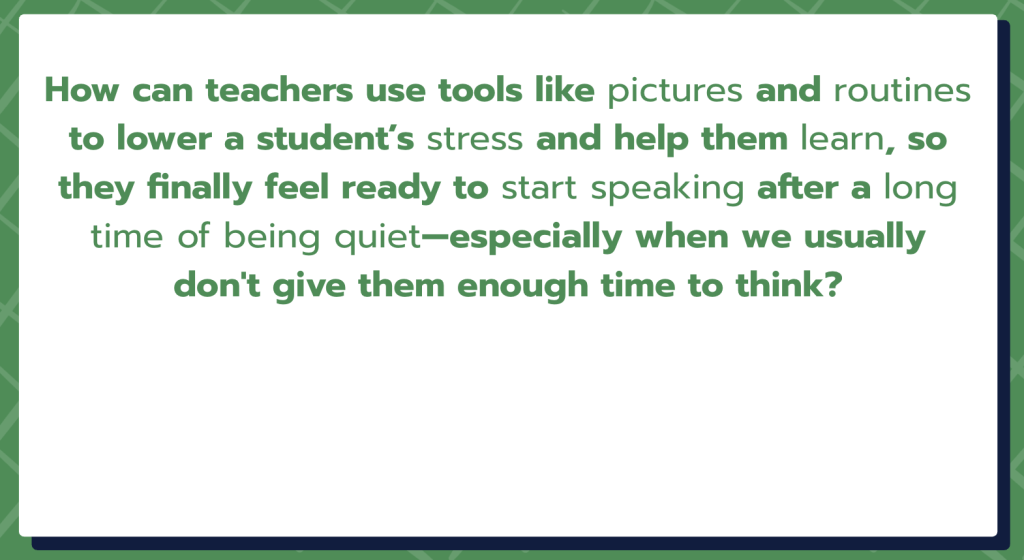
I thought so!
When a student is in their Zone of Proximal Development (ZPD), the cognitive load is immense. They aren’t just learning new concepts; they are translating, processing, and internalising a whole new linguistic system. As I always say: Thinking takes time. And let’s be honest – thinking in multiple languages takes even longer!
The 1.5-Second Trap
One of the biggest hurdles we face in the classroom is our own (im)patience. Research suggests the average teacher wait-time is only 1.5 seconds. And that hasn’t improved since the 1980s!
Just imagine the pressure! For an EAL learner navigating the silent period, 1.5 seconds is barely enough time to register the question, let alone formulate a response in a second or third language. If we want to optimize neuroplasticity and help students transition from receptive to productive language, we must consciously extend that wait-time. We need to give them the space to breathe and think.
Practical Strategies for Inclusion
So, how do we support these learners without forcing them into a state of “speech-panic”? Here are a few strategies that Peter Clements and I have found useful and documented in our book:
- Value Silent Contribution: Recognise that a nod, a drawing, or a pointed finger is a valid form of communication.
- Visible Thinking Routines: Use scaffolds like See-Think-Wonder or KWL charts. These provide a clear structure for students to notice, describe, and eventually think more deeply about a topic.
- Home Language Support: Encourage students to use their first language to bridge the gap. It’s about building on their “Funds of Knowledge” rather than starting from zero.
- Multimodal Stimuli: Use visual aids and consistent routines to lower the affective filter and make the learning environment predictable and safe.
Final Thoughts
At the end of the day, our goal isn’t just to get students to talk; it’s to make them feel heard – even when they are silent. By planning enough time for each stage of development and providing the right scaffolds, we ensure that when they finally do find their voice, they have the confidence to use it.
References
Clarke, P. (1992). English as a second language in early childhood. Kindergarten Teachers Association of Victoria.
Clements, P. and Szlapak, A. (2024) Supporting EAL Learners: Strategies for Inclusion. Delta.
Worgan, M. (2025) Teaching the quiet ones. YLTSIG Blog.